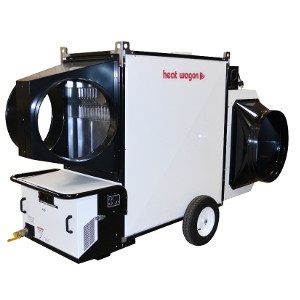
You know that feeling when the heat is beating down on one specific spot—whether it’s a workstation in a factory, a rack of servers about to cook themselves, or a tent full of sweaty guests at an outdoor wedding—and your regular AC just can’t cut it? That’s exactly why portable spot coolers exist. These coolers aren’t like your typical window units or rolling room coolers that try (and often fail) to chill an entire space. Spot coolers are built for precision. They roll right up to the problem, direct volumes of cool air exactly where you need it and leave the rest of the area alone.
If you’re looking for a portable air conditioner that makes sense for your situation, this guide breaks down what portable spot coolers really are, how they work, where they are most effective, and what to look for when buying or renting one.
What Makes a Portable Spot Cooler Different?
Portable spot coolers (sometimes called portable spot air conditioners or industrial spot coolers) are self-contained, wheeled units designed for targeted cooling. Unlike a standard portable AC that tries to lower the temperature of a whole room, these units direct powerful, refrigerated air straight at a person, piece of equipment, or process.
Most are air-cooled, meaning they pull in ambient air, run it over evaporator coils to chill it, and then shoot that cool air out through adjustable nozzles(chutes) or ducts. The hot exhaust gets vented out a flexible hose, or ceiling kit—usually through a window, door, or drop ceiling—so it doesn’t fight the cooling you’re trying to create. They range from about 13,000 to 120,000 BTU, with many popular models sitting right in the sweet spot for commercial and light industrial use (think 13,000–24,000 BTU).
You’ll often see a number of brands that advertise spot coolers, and at Thermal Flow Technologies we have partnered with Kwikool as our brand of choice. Kwikool units are designed and manufactured in the USA with the highest quality metal and components.
How Spot Coolers Actually Work (Without the Tech Jargon)
It’s basically a mini refrigeration system on wheels:
- Warm air gets sucked into the unit.
- It passes over cold evaporator coils (the refrigerant absorbs the heat).
- Cool, drier air discharges out the front—right at your target.
- The captured heat gets dumped out the exhaust hose via ceiling tiles or out of a window or door. Larger space applications that aren’t confined like warehouses will typically let the captured air exhaust into the open space, while pointing the cold air discharge at the employees working at their station.
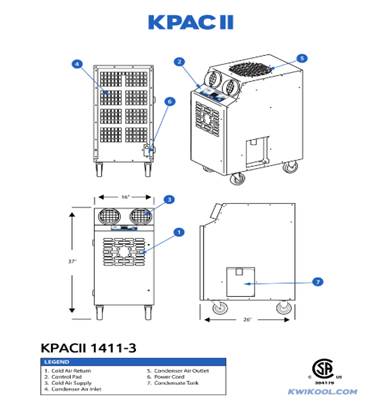
Below is a diagram drawing of the Kwikool KPAC 1411-3 portable spot cooler to give a visual representation of it’s construction, included the location of the cold air discharge. To see an overview video of this unit, click here.
Because they dehumidify as they cool, they’re great in humid environments too. Setup is very simple process: plug it in (most run on standard 115V or 220V power), position the exhaust, and point the cold-air nozzles where you want them. No permanent installation is required.
Why People Love Portable Spot Coolers (The Real Benefits)
- Energy efficiency: You’re not wasting money cooling an entire warehouse when only three workstations are miserable.
- Instant relief: Roll it in, turn it on, and you feel the difference in minutes.
- Versatility: Great for temporary needs—HVAC breakdowns, summer heat waves, special events, or construction projects.
- Equipment protection: Servers, CNC machines, and control panels stay happy when you keep their immediate environment cool and dry.
- Mobility: One person can usually move them around without a forklift, as all of our Kwikool portable spot coolers are on casters.
Compared to full portable room ACs, spot coolers are more industrial-grade and focused. Room units are better for bedrooms or small offices; spot coolers are built for the tough stuff. These aren’t the type of portable plastic units or window units that you find in residences.
Where Portable Spot Coolers Are Used Most (Real-World Applications)
This is where these units really earn their keep. Here are the most common—and most effective—uses:
Manufacturing and Warehouses Production lines generate serious heat. Spot coolers keep workers comfortable at their stations without blasting the whole 50,000-square-foot building. They also cool products faster (plastics, food processing) and prevent warping or condensation issues. Many factories roll them right up to assembly areas or shipping bays.
Data Centers and Server Rooms Servers hate heat. When your main CRAC system is struggling or you’ve got a hot spot, a portable spot cooler provides supplemental cooling exactly where the racks are pumping out BTUs. It’s a lifesaver during maintenance or when you’re expanding.
Construction Sites New builds or renovations often lack finished HVAC. Kwikool Spot coolers keep crews productive during brutal summer months and help dry out materials after rain. They’re perfect for enclosed areas or portable jobsite office trailers too.
Events and Hospitality Outdoor weddings, festivals, corporate tents—anywhere people gather and there’s no built-in cooling. A few strategically placed spot coolers can turn an unbearable tent into a comfortable space without the cost of a full temporary HVAC system.
Healthcare Facilities Hospitals use them for supplemental patient-room cooling, equipment areas, or during HVAC maintenance. They’re also handy in labs and pharmacies where temperature control is critical. Kwikool even produces portable spot coolers that contain HEPA filitration and UV disinfection lights specifically designed for these facilities.
Emergency and Backup Cooling Power outages, broken central systems, or disaster recovery—spot coolers are often the first thing rental companies deliver because they deploy fast and work.
Other niche spots include restaurants (especially kitchens), retail during heat waves, and even some agricultural applications like drying or cooling specific grow areas.
Choosing the Right Portable Spot Cooler
Size matters. Match the BTU rating to the heat load of the area you’re cooling—not the whole room. Look for:
- Adjustable cold-air nozzles or ducts
- Easy-to-clean filters
- Condensate handling (some self-evaporate, others have tanks)
- Quiet operation if it’s near people
- Durable wheels and build quality
Renting is often smarter than buying if your need is temporary. Many companies offer same-day delivery and can help size the unit properly.
Quick Maintenance Tips to Keep Them Running Strong
- Clean or replace filters regularly (dust kills efficiency by reducing free airflow through the system).
- Make sure the exhaust hose is properly vented—kinked hoses = poor performance.
- Drain condensate if the model requires it, Kwikool models have an auto-pump feature for condensate
- Keep the unit on a level surface.
A well-maintained spot cooler can run reliably for years.
Bottom Line: Are Portable Spot Coolers Worth It?
If you need cooling in a specific spot rather than the whole space, absolutely. They’re efficient, portable, and solve problems that traditional HVAC can’t touch without massive expense. Whether you’re running a factory floor, protecting expensive servers, or just trying to keep guests comfortable at an event, these units deliver targeted relief fast.
Frequently Asked Questions
How loud are portable spot coolers? They’re louder than a household AC but quieter than most industrial fans. Look for models rated under 60 dB if noise is a concern.
Do they work in high-humidity areas? Yes—they actually dehumidify while cooling, which helps a lot in muggy climates.
Can I use one outdoors? Most are designed for indoor use, but some rugged models work in semi-protected outdoor spots like covered patios or tents.
What power do they need? Smaller units run on standard 115V outlets; larger ones may need 220V. Always check the specs.
Ready to beat the heat exactly where it hurts? A portable spot cooler might be the smartest cooling investment you make this year. For questions or assistance with choosing the right Kwikool portable spot cooler for your application, contact 833-401-3569 extension 2, or fill out a contact form and one of our representatives will assist you.